What's Playing Behind Your Plate: Notes on Sound and Supper

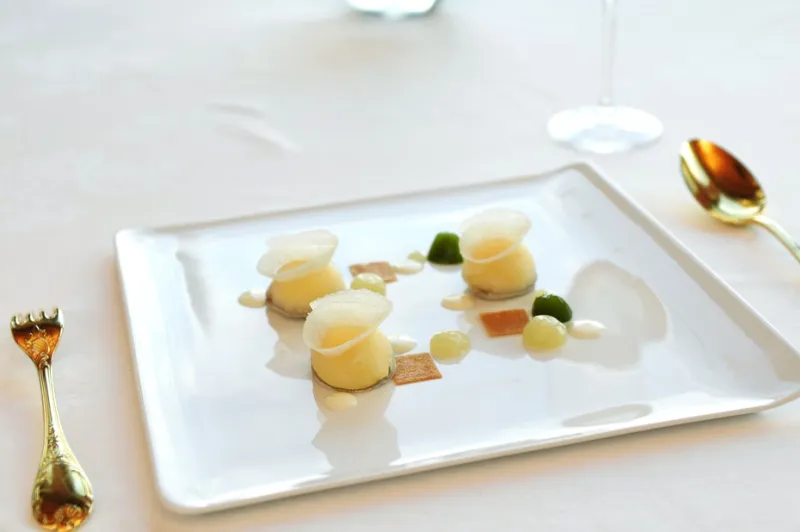
Photo by Photo by Mathias Reding on Unsplash on Unsplash
It is a Friday in early November, and by five o'clock the light has already given up. The walk to dinner is a cold one: coat collar up, breath visible, pavement slick. Then you push through our door and the first thing that greets you is not the smell of the kitchen or the sight of the room. It is the sound. A double bass walking somewhere behind the chatter, a cork leaving a bottle, a chair leg scraping as someone settles in.
Sound is the course we never write on the menu, and it is the one that quietly seasons everything else. Change the record and the same plate of food can feel like a celebration, a confession or a Tuesday. So this month we thought we would say something about it.
Volume: the dial that changes the room
Hospitality researchers have been poking at this for decades, and the findings are consistent enough to be boring: louder rooms make people eat faster, drink more and leave sooner. Quieter rooms make them linger. None of that is a mystery once you have watched a dining room for a living, but it is worth saying out loud that we are not in the business of hurrying anybody. A room that tips past about 75 decibels stops being a restaurant and becomes an airport lounge. If you have to lean across the table and shout, the music has failed, no matter how good the song was.
Tempo is the quietest suggestion on the table
Tempo does a lot of unglamorous work. Play something slow and low when guests arrive and they settle, take their time with the menu, order the second glass. Play something at a clip and the whole evening finds a stride. Get it wrong — a slow, sad record at nine o'clock on a Saturday — and the room goes flat, like a party where nobody has been introduced.
Our maître d', Elena, thinks of the playlist the way a stage manager thinks about lighting. 'A restaurant is theatre,' she says. 'The food is the script, the room is the set, and the music is the lighting. Nobody comes for the lighting. But if it is wrong, everybody notices.'
She builds an evening in three movements. Arrival is warm and low, somewhere around 70 to 80 beats per minute: jazz, a bit of Italian library music, nothing that asks for attention. Mains get a gentle lift, closer to 95. Puddings and coffee come back down, usually with a bit of swing, so the last half hour feels like a lingering rather than last orders.
'The hardest moment is half six,' she says. 'The room is half full, everyone is being very polite. The music has to do what a good host does — make you feel like the evening started without you.'
Genre, or why we leave the charts alone
There is a reason you rarely hear the radio in a good dining room: lyrics compete. A familiar song pulls half the room into a singalong and the other half into a memory, and neither of them is talking to each other. Instrumental music gives conversation somewhere to sit. That said, we are not precious about it. Our playlist runs through Cyprus and Venice the way our menu does — a little rebetiko, some smoky Mediterranean guitar, a little film music from the sixties, and a Nina Simone record that Elena defends with her life.
Silence is a course too
We leave small gaps between songs. Not for drama; for the room. A dining room has its own sound — glassware, cutlery, laughter, the kitchen door — and if you never let it through, the evening feels like it is being commentated on.
How to tune in
You do not need to be a musician to notice any of this. A few small habits:
- Arrive ten minutes early and listen before you sit. You will hear what mood the room is in.
- Notice the change between courses. Somewhere around the main course, the music usually lifts. That is deliberate.
- Ask what is playing. Staff genuinely love being asked, and on a good night you will leave with the name of your new favourite album.
- Sit away from the speakers if you want to talk properly; sit near them if you want atmosphere. There is no wrong answer.
- On the walk home, try to hum the last song you heard. If you cannot, the playlist did its job — it stayed out of the way.
What is playing this November
As the evenings close in, Elena has added a little brass and a lot of warmth: Chet Baker, some Cypriot lute, a slow, unhurried version of a standard that she will not name because she wants you to ask. Christmas bookings are already filling the diary, and she has a separate December list that she describes, ominously, as 'sparklier'.
The best sound of any night out, though, is your own table: the argument about the bill, the story that goes on too long, the laughter from the corner. The music is just there to make room for it. Dress up, sit down and listen — the evening has a soundtrack, and it has been waiting for you.