Aprons Off: What Our Chefs Cook When the Pass Goes Quiet

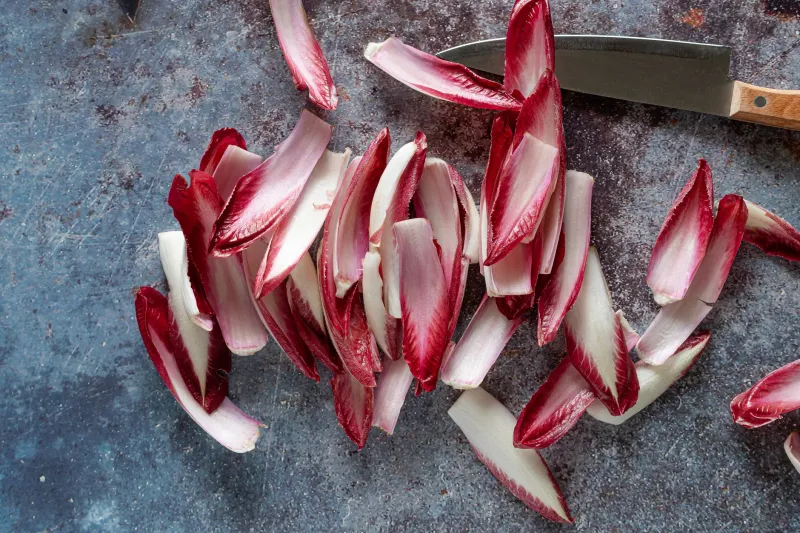
Photo: Basile Morin, CC BY-SA 4.0, via Wikimedia Commons
Monday morning, and the kitchen at Othello is dark. The pass is wiped down, the stock pots are stacked, and somewhere a walk-in fridge is humming to itself. Our chefs work Wednesday to Sunday, so Monday is the day the aprons come off — and, predictably, the day they all end up cooking anyway.
Not that kind of cooking. There are no tasting spoons on a Monday. No reduction of anything, no quenelles, no wiping the rim of a plate with a cloth. What professionals make for themselves is usually the opposite of what they make for you: one pan, four ingredients, and a radio in the background.
The one-pan rule
Ask any chef what they cook at home and you will hear a variation on the same theme. Fewer components. More acid. Something they can eat standing up. Our head chef, Amara, puts it best: 'At work I taste forty things before noon. At home I want one thing that tastes of itself.'
That is not laziness. It is recovery. A professional palate gets tired the way a leg gets tired, and after a week of tasting and adjusting and tasting again, what the body craves is salt, acid and texture — not another spoonful of something rich.
Amara: dal, rice and the radio
Amara's Monday lunch is toor dal cooked with more garlic than is strictly sensible, basmati from the rice cooker she bought in 2019 and refuses to apologise for, and a spoon of her mother's mango pickle from a jar that is ferried over from Leeds twice a year. Radio 4 murmurs in the background. A lemon is squeezed over everything at the last minute.
'Restaurant food is built,' she says. 'It is layered and seasoned and checked. Dal is not built, it just happens. You put it on and go and have a shower.'
She also admits that her home cooking is saltier than anything she would send out. 'At work I cook for the room. At home I cook for me. My palate has been shouting for acid all week.'
Danny: the sandwich that ends the week
Our sous chef, Danny, has a Tuesday routine that has not changed in years. White bloomer from the bakery two doors down, salted butter, thick-cut smoked bacon, brown sauce, and a fried egg if the week has been particularly bad. Eaten standing up, over the sink, in about four minutes.
'It is the only dish I have never had to plate,' he says. 'Nobody has ever sent it back.'
He does still cook properly on his day off — a Sunday roast, usually, even though Sunday is a working day for the rest of us. 'A roast is not cooking,' he insists. 'A roast is a morning. You put it in, you forget about it, you read the paper. That is not work, that is a hobby with gravy.'
Priya: khichdi at midnight
Our pastry chef, Priya, spends her working week in the least forgiving corner of the kitchen: tempered chocolate, spun sugar, tuiles that break if you look at them wrong. On her day off she makes khichdi — rice and moong dal simmered with cumin, turmeric and ghee, finished with a spoon of yoghurt.
'Sugar work does not forgive you,' she says. 'Khichdi does. You can add too much water and it becomes something else and it is still nice.'
She eats it late, usually around eleven, in front of something terrible on television. 'I do not want a project. I want a bowl and a blanket.'
The recipe: burnt-butter dal on toast
This is the sort of thing any of the three of them would make on a Monday: fast, forgiving, and made almost entirely from things already in the cupboard. It serves two, takes about 25 minutes, and is best eaten in a jumper.
You will need:
- 150g red lentils, rinsed
- 1 tsp ground turmeric
- 1 tsp fine salt
- 40g unsalted butter
- 2 garlic cloves, thinly sliced
- 1 tsp cumin seeds
- A pinch of chilli flakes
- Half a lemon
- 2 thick slices of sourdough
- A handful of coriander, chopped
- Yoghurt, to serve (optional)
Method:
- Put the lentils in a pan with the turmeric, salt and 600ml water. Bring to a simmer and cook for about 20 minutes, skimming any foam, until the lentils have collapsed into something soft and porridge-like.
- Toast the sourdough while the lentils finish.
- Melt the butter in a small pan over a medium heat and let it foam and turn nut-brown — two or three minutes. Add the garlic, cumin seeds and chilli flakes and let them sizzle for 30 seconds, then take the pan off the heat.
- Stir half the butter mixture into the dal and squeeze in the lemon. Taste it. It will probably want more salt.
- Spoon the dal over the toast, pour the rest of the butter over the top, and finish with coriander and a spoon of yoghurt if you have it.
What a day off tastes like
A chef's day off is not a day away from food. It is food without an audience — no pass, no ticket, no one to impress. The apron comes off, the playlist gets worse, and the plate gets fuller.
If you want to know what your server really eats, ask them. You will get a better answer than the specials board, and probably a better recipe too. And when you next book a table here, remember that the people cooking your dinner have Mondays as well — and on those Mondays, they are almost certainly having toast.