Five Acts, One Table: How We Build a Menu Like a Play
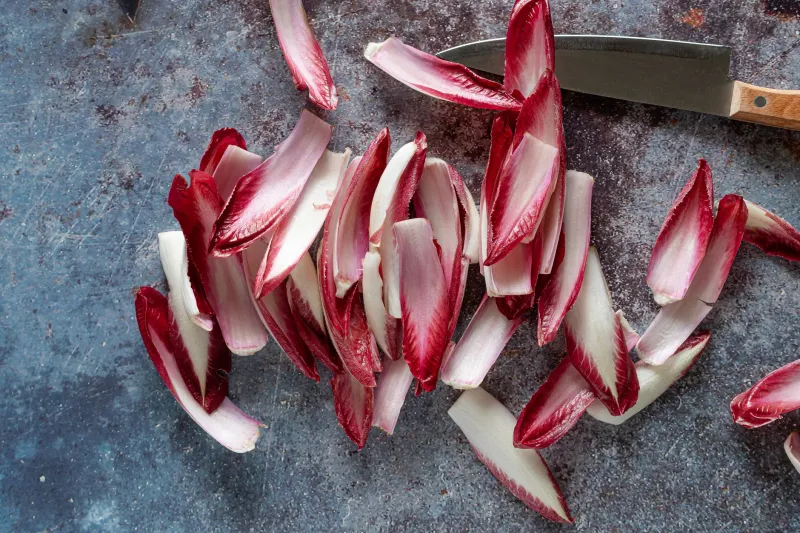
Photo: Shixart1985, CC BY 2.0, via Wikimedia Commons
Ask most people what they want from a restaurant menu and they will say choice. Fair enough. But choice without structure is just a very long list. At Othello, we tend to think of the menu the way a director thinks of a play: not as a collection of speeches, but as a sequence that builds, breathes and lands. There is no interval. The whole evening is the performance, and every plate has a cue.
The curtain rises: the opening appetiser
The first thing to reach the table is not dinner. It is a handshake. On our current menu, that often means a small crostino of salted cod, sharpened with lemon and a little chilli, or a spoonful of warm chickpea purée with rosemary oil. It is deliberately modest. An opening appetiser should settle the room rather than shout across it. Think of it as the first line of a play: clear, confident and just intriguing enough to make you lean forward.
This is also where we set the tone for the rest of the evening. Something briny, something warm, something with a little acid — these are the stage lights coming up. If the first bite is too rich, the second act has nowhere to go. If it is too timid, the audience starts checking their phones.
Act two: the starters arrange the plot
Starters do the work of exposition. They introduce the cast: smoke, citrus, herbs, pulses, cured fish, grilled cheese. Our charred octopus with smoked paprika and pickled fennel is a good example. It has enough drama to be interesting, but it is not the climax. It tells you what kind of kitchen you are dealing with — precise, a little smoky, fond of a sharp edge — without exhausting your appetite or your attention.
A vegetarian opener such as grilled halloumi with honey, oregano and toasted seeds does a similar job in a different key. It is sweet, salty and warm, and it prepares the palate for the bigger flavours ahead. The mistake people make is treating starters as a mini main course. They are not. They are the scene that makes the main event make sense.
Act three: the main event earns its entrance
The main course is the centre of the evening, but it should not arrive like a fireworks finale before the fireworks. At Othello, we look for dishes with a clear beginning, middle and end: a piece of fish or meat or vegetables with a crust or a glaze, a sauce that does some work, and a side that is not an afterthought. Our slow-braised short rib with Cyprus potatoes and a dark, glossy jus is built for that moment. It has weight, but it also has a little acidity running through it so the plate does not become a monologue.
For a lighter production, the sea bass with saffron fennel and preserved lemon is the equivalent of a very well-dressed lead actor: elegant, not fussy, and confident enough to let the supporting ingredients speak. Either way, the main course should feel like the reason you booked the table — not the reason you need a lie-down before pudding.
Act four: the side plots and the pause
We do not believe in an interval, but we do believe in a pause. The best restaurants build a little air into the evening: a few minutes between courses, a top-up of water, a glance at the room. That pause is where conversation happens, where the night settles, where you decide whether you actually want another glass of wine. It is also where a side dish can quietly steal the scene. A bitter leaf salad with pomegranate and walnuts, or a bowl of greens with garlic and lemon, can reset the palate better than any speech.
In dramatic terms, this is the falling action. The main event has happened. Now the evening needs to exhale before the final scene.
Act five: dessert writes the last line
The pudding is not an encore. It is the final scene, and it should leave the audience with the right feeling as the lights come up. Our dark chocolate and olive oil tart with sea salt is a good closing line: bitter, sweet, rich and just sharp enough to make you want a coffee. Loukoumades with honey and cinnamon do the same job in a warmer, more nostalgic register. Either way, the last bite should feel deliberate. A good dessert does not try to sum up the whole meal. It simply ends it well.
How to write your own three-course script
You do not need to order the whole menu to get the full effect. A three-course script is often the most satisfying way to eat here, and it is easy to compose once you know the logic.
Start with one opening appetiser or starter, not both. Pick the main course you actually want, rather than the one that sounds most impressive on paper. Choose a side that contrasts with the main — something green or bitter if the main is rich, something starchy if the main is light. Finish with a dessert that changes the temperature of the meal: something sharp after a heavy main, something warm after a light one.
And pace yourself. Tell your server if you want a slower evening. Ask for the wine by the glass if you are driving or simply do not want a bottle. Order coffee before the bill, not after it. The script is there to support the evening, not to hurry it along.
No interval required
A menu is a sequence of decisions, and at Othello we make those decisions in the kitchen so that the evening has shape. The opening appetiser sets the tone, the starters introduce the themes, the main course delivers the drama, the sides and the pause let it breathe, and the dessert writes the last line. You bring the company, the appetite and the willingness to dress up a little. The rest is stagecraft.
Dining worth dressing up for is not only about the food on the plate. It is about the order in which the plates arrive, and the feeling they leave behind when the table is cleared.