Why a Little Bitterness Makes the Whole Meal Sing
Shakespeare's Othello is not a play about chicory. Let us get that out of the way. But it is a play about tension: love and suspicion, poetry and violence, the polished surface and the thing churning underneath. A great menu has some of that same friction. Not the murderous kind, obviously. The useful kind. The kind that makes you put your fork down for a second and pay attention.
At Othello Restaurant, we are not interested in plates that agree with you all the way through. A rich braise wants something sharp beside it. A sweet dessert needs a bitter edge to stop it becoming a syrup. That is not a chef's affectation; it is the difference between a nice meal and one you remember on the bus home.
The Case for a Little Friction
Bitter flavours have a reputation problem in the UK. We are a country that loves a roast, a pie and a cup of tea, and we are suspicious of anything that tastes like a lesson in virtue. Chicory can seem like the vegetable equivalent of a gym membership: good for you, joyless, slightly punitive.
But bitterness is not punishment. It is a wake-up call. On the palate, bitterness cuts through fat and resets the taste buds. It makes the next mouthful taste more like itself. Put a leaf of radicchio next to a piece of slow-cooked pork and the pork suddenly seems sweeter, richer, more generous. Put a square of dark chocolate beside a spoonful of salted caramel and the caramel stops shouting.
That is the Othello lesson, if you want one: the best meals need a bit of tension. Not conflict for its own sake, but contrast that makes both sides more interesting.
Bitter Greens, Richer Plates
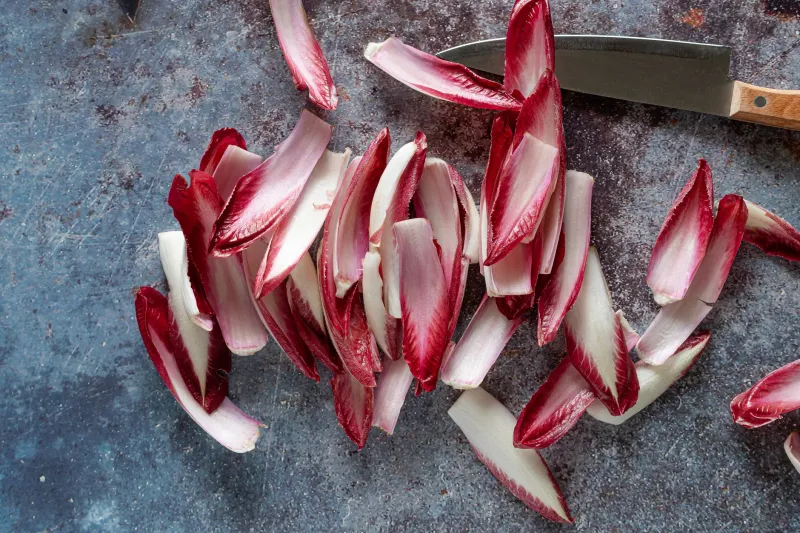
We use chicory and radicchio in the kitchen because they are brilliant at this job. Chicory has a clean, almost cooling bitterness; radicchio is deeper and more winey, especially when it hits a hot grill. Neither needs to be tamed into blandness. They need a partner with some weight.
One dish we return to is grilled radicchio with aged balsamic, toasted hazelnuts and a slick of good olive oil. The char brings out the sweetness in the leaf, the balsamic adds a dark, syrupy note, and the hazelnuts give texture. It is simple enough to make at home, but it tastes like something you would put on a proper table.
Chicory works beautifully with citrus. A winter salad of chicory, blood orange, fennel and a little salty cheese is one of the most useful things you can have in your repertoire. The orange is sweet, the chicory is bitter, the fennel is aromatic, the cheese is salty. Every mouthful argues a little, then settles down. In the restaurant we might add a few drops of a sharp dressing or a handful of walnuts, but the principle stays the same: sweet, bitter, salty, rich.
If you are cooking at home, do not drown the greens in sugar. A little honey or orange juice is fine, but if you smother the bitterness completely you have wasted the point of buying the vegetable in the first place.
Sweet Wines That Meet Their Match
This is where the masterclass bit comes in. Bitter food and sweet wine can be a wonderful pairing, but only if you think about weight and intensity. A delicate off-dry white will disappear next to a plate of grilled radicchio. A heavy, syrupy red will bully it. You want sweetness with enough acidity to keep things fresh.
Late-harvest Riesling is a great starting point. It has sweetness, but it also has a bright, citrusy spine, which means it can handle chicory and citrus salads without turning cloying. If you are serving something with a bit more richness, such as a chicory tart with gruyere or a plate of roasted radicchio with pancetta, a late-harvest Chenin Blanc or a botrytis Semillon can work well. The sweetness softens the bitter edge; the acidity stops the whole thing becoming heavy.
For dark chocolate, look to fortified or dried-fruit wines. A good tawny port, a Passito di Pantelleria or a sweet sherry can be magic with a bitter chocolate tart. The trick is to keep the chocolate bitter enough. If your dessert tastes like a chocolate bar, the wine will seem like overkill. If it has a proper dark, roasted edge, the wine has something to push against.
At Othello, we like to finish a meal with a small glass rather than a huge one. Sweet wine is not a challenge; it is a punctuation mark. A little goes a long way.
Dark Chocolate Is Not a Dessert Cliche
Bitter chocolate is one of the most useful ingredients in a restaurant kitchen because it brings depth without bringing too much sugar. A dark chocolate tart with a pinch of sea salt and a slick of olive oil is a good example. The chocolate is intense, the salt lifts it, the olive oil adds a savoury note. It is rich, but it is not sweet in a childish way.
Pair that with a late-harvest wine or a small glass of tawny and you have the whole Othello idea on a plate: bitter and sweet, dark and bright, serious and a little bit playful. You do not need a Shakespeare degree to enjoy it. You just need to be willing to let one flavour answer another.
A Note on Balance
Balance is not the same as mildness. A balanced meal can still have a punch. It can still have a sharp dressing, a bitter leaf, a salty cheese, a sweet wine. The point is not to make everything taste the same; the point is to make everything taste more.
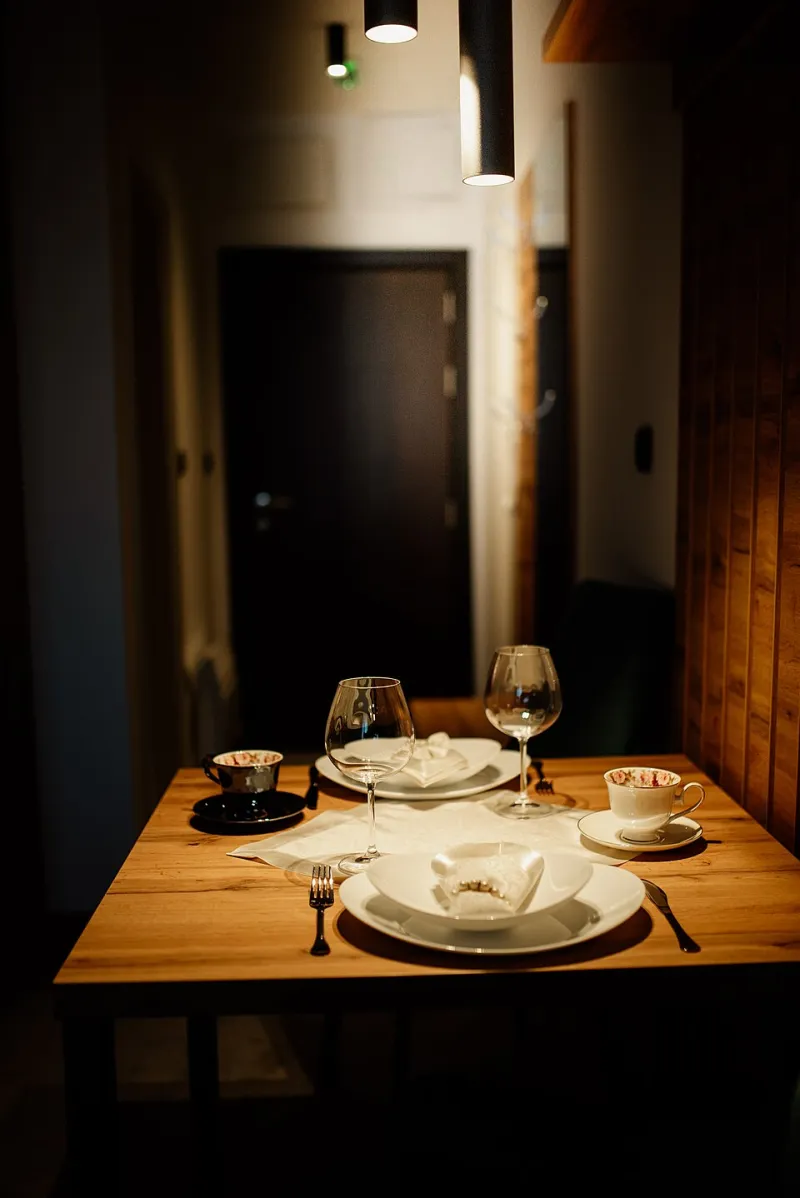
That is why we treat a Tuesday table with the same ceremony as a Saturday one, and why we like a menu that asks you to pay attention. Dining worth dressing up for is not only about the clothes. It is about the small moment of tension before the first bite, when you are not quite sure how it is all going to work.
Othello would understand. Probably.