The Spice Routes on Your Plate: Reading Our Menu Through Venice and Cyprus
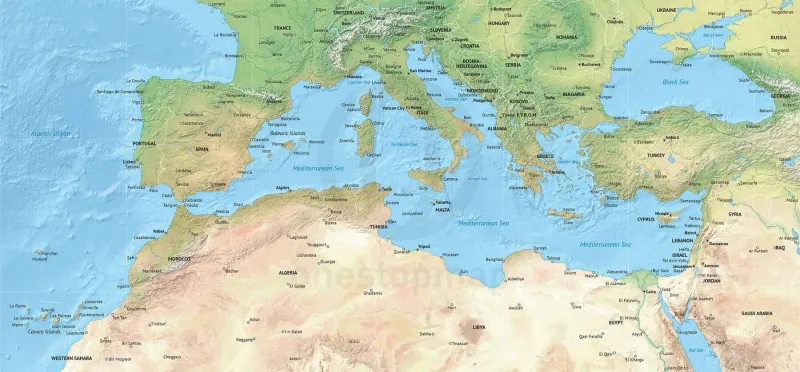
Photo: Mediterranean spices citrus seafood wine rustic table flat lay, via www.onestopmap.com
Long before Othello was a restaurant, Othello was a story about a soldier in Venice, a general sent to Cyprus, and a world held together by trade. Shakespeare gave us jealousy and handkerchiefs. The kitchen gives us something just as revealing: the pantry. Follow the spices, the wine, the citrus and the seafood across the map and you find a way of eating that is Mediterranean in the fullest sense — not a single cuisine, but a conversation between coasts.
That is the idea behind our menu at Othello Restaurant. We are not trying to stage a history lesson on a plate. But when you know where an ingredient has been, a dish can suddenly read differently. A pinch of cumin is no longer just a background note. It is a clue. A glass of amber wine is not just a pairing. It is a route.
Venice: the original fusion kitchen
Venice in the height of its trading power was a city that tasted the world. Salt came in from the lagoon and beyond. Pepper, cinnamon, cloves, ginger and nutmeg arrived through the Levant, carried by merchants who understood that a spice box could be worth more than a chest of gold. The city’s kitchens absorbed those flavours into a style that was both local and global: seafood from the Adriatic, rice from the Po valley, butter and cheese from the north, and a generous hand with spice that would surprise anyone who thinks Italian food is only tomato and basil.
Look for that Venetian instinct in dishes that balance richness with something aromatic. A saffron risotto is the obvious example — the rice is northern, the saffron is a traveller, and the finished plate is pure Venice. Shellfish, simply grilled or folded through pasta, belongs to the lagoon. Tiny cicchetti, the bar snacks you eat standing up with a glass of something cold, belong to the city’s social life. Venice understood long before anyone invented the phrase that small plates and a good drink are a complete evening.
For our menu, that translates into dishes with a certain quiet complexity. A seafood risotto does not need a dozen ingredients. It needs good stock, patience, and a thread of spice or citrus to lift it. A plate of grilled fish needs little more than olive oil, salt and lemon — but the lemon matters.
Cyprus: sun, herbs and a slower table
If Venice is the merchant’s kitchen, Cyprus is the sunlit garden and the long table. The island sits at the eastern edge of the Mediterranean, close enough to the Levant to share its spices, its flatbreads and its sweet tooth, and Greek enough to claim oregano, olive oil, halloumi and slow-cooked lamb as its own. The food is generous, herb-scented and built for sharing. It is the kind of cooking that makes you reach across the table.
Cyprus also has a sweet side that is often overlooked. Carob, honey, nuts and dried fruit turn up in puddings and pastries. Commandaria, the island’s amber sweet wine, has been made for centuries and tastes like something from a different century — in a good way. To eat Cypriot food is to understand that the Mediterranean is not one climate but many, and that the best dishes often come from the meeting point.
On our menu, that Cypriot influence shows up in the use of oregano, lemon, cumin and good olive oil. A slow-roasted lamb with herbs and citrus is not a showy dish. It is a patient one. The point is the crust, the juice, the way the meat falls away. It wants a wine with enough structure to stand up to it, but not so much that it shouts over the food.
The pantry in practice: five dishes and what to drink
You do not need to memorise a map to enjoy this. You just need to know what to look for.
Citrus-cured sea bass with fennel and pink peppercorn
Curing fish in citrus is a way of cooking without heat, and it fits the Mediterranean idea perfectly: bright, clean, slightly sharp. The fennel adds an aniseed note that Venice would have recognised, and the pink peppercorn gives a floral heat rather than a burn. Pair it with something crisp and mineral — a Vermentino or a dry Prosecco. The point is to keep the acidity level high.
Grilled octopus with smoked paprika and chickpea purée
Octopus is one of those ingredients that separates a good kitchen from a nervous one. It needs to be tender but not soft, charred but not dry. Smoked paprika brings a Spanish note, but the dish sits comfortably in the wider Mediterranean. A glass of Assyrtiko from Santorini would be lovely here, or a light, chillable red if you prefer. The chickpea purée is the quiet hero.
Venetian-style shellfish risotto with saffron
This is the dish that most directly tells the story of Venice: rice from the north, shellfish from the lagoon, saffron from the trade routes. It should be loose enough to spread on the plate, not stiff enough to stand up. Pair with a Soave or a Pinot Grigio that has a bit more texture than the cheapest examples. If you want to push the boat out, a mature white Rioja can be a surprising match.
Cyprus-inspired slow-roasted lamb with cumin, oregano and lemon
Cumin and oregano are the bridge here — cumin from the eastern trade routes, oregano from the hillsides. Lemon cuts through the richness. This is a dish for a red with earthy, savoury notes: Agiorgitiko from Greece, or a Xinomavro if you like a bit of grip. It is also the kind of plate that makes a table go quiet for a moment.
Spiced quince and almond tart
Quince is an old Mediterranean fruit, aromatic and slightly tart, and it loves spice. Almonds add richness. A slice of this with a glass of Commandaria is a proper ending: sweet, nutty, a little bit grown-up. If you prefer something lighter, a Muscat works nicely.
How to read a menu like a trader
The next time you look at a menu, look for the bridge ingredients. Citrus. Salt. Olive oil. Cumin. Oregano. Saffron. Raisins and pine nuts. These are the things that moved. They tell you which kitchens were talking to each other. They also tell you what to drink: acidity with acidity, spice with aromatic whites, slow-cooked meat with earthy reds.
And ask questions. The best restaurant staff are not there to test you. They are there to help you find the plate that fits your mood. If you are curious about a dish, say so. If you want a pairing that is not on the list, ask. The pantry is a map, but the meal is the journey.
At Othello, we like to think of the menu as a short story with several possible endings. You can stay in Venice. You can spend the evening in Cyprus. Or you can do what the traders did and move between the two. The history is there if you want it. But the first job is to enjoy the food.