The Curtain-Line Pudding: Why the Last Spoonful Should Wake You Up

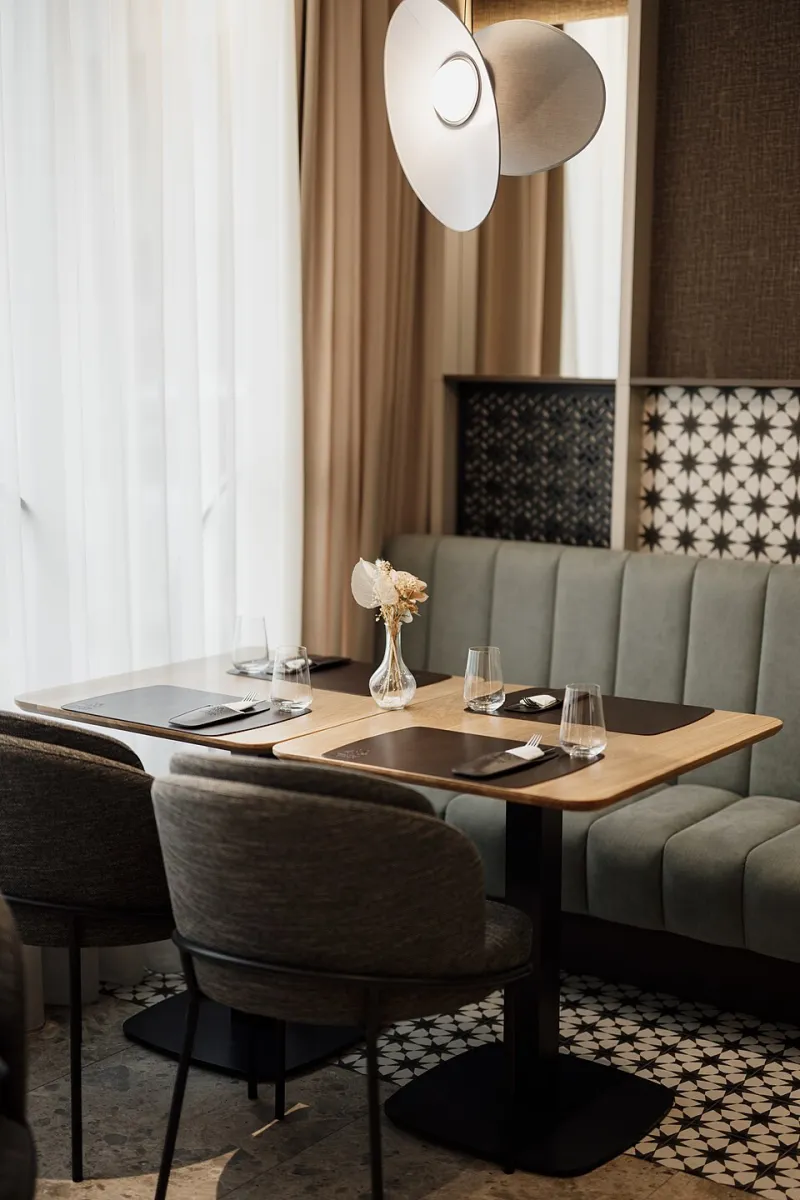
Photo: small lemon olive oil cake with citrus and espresso on a restaurant table, UK dining, via content.tinytap.it
The finale should not fight the feast
There is a particular moment near the end of a big night out when the pudding menu arrives and the table divides. Half the party wants something enormous, molten and covered in caramel. The other half wants coffee and a clean exit. Both instincts are understandable. Neither is quite the whole story.
At Othello, we think the last course has a job to do. It is not an encore. It is the curtain line. It should land the evening, not restart it. That is why our pastry section tends to favour puddings that are small, sharp and just strange enough to make you sit up again.
This is not an argument against indulgence. A proper dinner out should feel generous. But generosity does not have to mean a sugar rush so heavy that the walk home feels like a tactical retreat. In recent years, UK diners have become more curious about what a pudding can do beyond being sweet. They are ordering lemon posset with sea salt, olive oil cake with cracked pepper, ice creams tinged with bay or rosemary. They are asking for puddings that taste of something, not just of sugar.
Small is a flavour strategy, not a diet
A small pudding is often a more intense pudding. When you are not trying to fill a bowl, you can concentrate the flavours. A slice of lemon and olive oil cake no bigger than a couple of fingers can carry more perfume than a vast wedge because every bite is doing something.
At Othello, we like a final course that feels like a sentence rather than a paragraph. A spoonful of bitter chocolate sorbet. A tiny tart with rhubarb so sharp it makes your eyes water in the best way. A scoop of olive oil ice cream with a pinch of flaky salt and a shard of something crisp. These are not austere. They are precise.
The slightly strange part matters too. Not strange for the sake of it, but strange enough to wake up the palate. A herb in a sweet course. A savoury edge. A little bitterness. A texture that is not simply soft. The best puddings give the mouth something to think about while the coffee arrives.
Sharpness is the cleanest ending
Acid is underrated in British puddings. We are very good at butter, cream and toffee, and rightly proud of all three. But a little sharpness can make a rich meal feel finished rather than abandoned.
Think of a lemon tart with a crust thin enough to snap. Or yoghurt panna cotta with poached gooseberry. Or buttermilk ice cream with a few drops of good olive oil. The acidity cuts through everything that came before and leaves you feeling alert. It is the difference between a pudding that sits on top of dinner and one that settles it.
We also like a touch of salt in the final course. Not enough to announce itself, just enough to make the sweetness taste more like itself. Sea salt on caramel. A saline edge to chocolate. A savoury biscuit under something creamy. These are small moves with a big effect.
The case for a savoury-tinged scoop
Ice cream is where the pastry section can have a little fun. Vanilla is a beautiful thing, but it is not the only option. Bay leaf ice cream has a gentle, almost medicinal warmth. Rosemary works with honey. Olive oil ice cream is richer than it sounds and wonderfully grown-up. A little fennel pollen or toasted coriander seed can make a simple scoop feel like a proper restaurant gesture.
The point is not to confuse the diner. The point is to give the last course a bit of character. A slightly savoury ice cream alongside a sharp cake or a poached fruit can feel like the most natural thing in the world. It also pairs beautifully with the sort of after-dinner drinks we like to pour: a small glass of Commandaria, a splash of amaro, a marsala that smells of walnuts and dried figs.
Pairing the final act
If you are finishing a big meal, the pairing matters as much as the pudding. A lemon and olive oil cake is lovely with a glass of sweet wine that has its own citrus edge. Something like a young Tokaji or a fresh malvasia can work beautifully. A bitter chocolate pudding, on the other hand, likes a darker, nuttier pour. Think tawny port or a small amaro over ice.
Coffee is not a cop-out. A good espresso is one of the great curtain lines. It clears the palate, slows the table down and gives everyone a reason to sit for another ten minutes. If you want something softer, a pot of mint tea is a fine finish after a rich dinner.
Chef tips for finishing without losing the plot
Our first tip is to order one pudding for the table and ask for extra spoons. A few bites each is often exactly right. The second is to look for acid and salt on the menu. If a pudding lists citrus, yoghurt, buttermilk or olive oil, it is usually a good sign. The third is to think about temperature. A cool, sharp pudding after a hot, rich main course is a wonderful reset.
Do not skip the final course just because you are full. A small, bright pudding can actually help. And if you are in for a long evening, pace yourself. Save a little room. Order the pudding you are curious about rather than the one you always order. Finish with coffee or a digestivo. Then take the long way home.
At Othello, we want the last spoonful to feel like the lights coming up on a good play. You should leave the table satisfied, but also awake to the walk home, the conversation and the rest of the night. That is what a curtain-line pudding is for.