The Table Has Already Ordered: Notes from the Floor
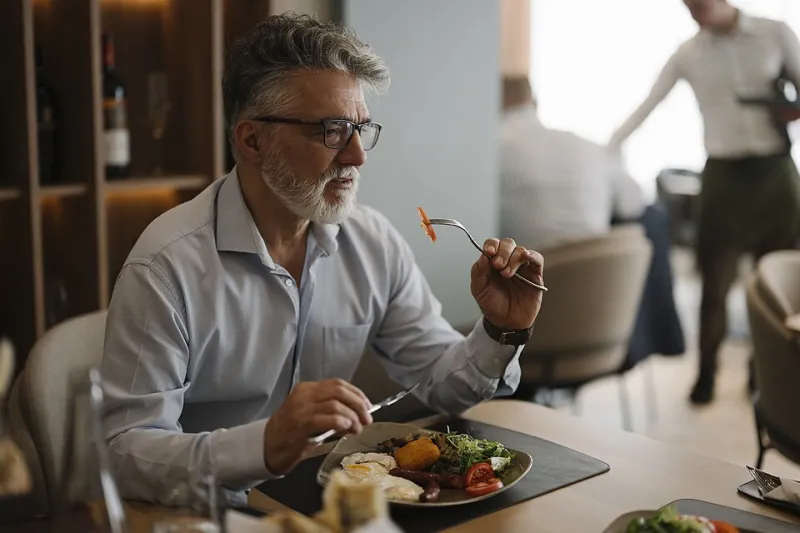
Photo: Shixart1985, CC BY 2.0, via Wikimedia Commons
At 19:42 on a Saturday, the dining room is doing what dining rooms do best: performing without a script. From the floor, the view is not a single table but a grid of small human weather systems. One couple is still deciding. Another has already decided and is pretending not to. A four is laughing at something that happened before they arrived. Nobody has ordered yet, but the table has already said plenty.
Waiting on a room is often described as anticipating needs. That makes it sound like mind-reading. It is not. It is closer to reading a room in the way you read a novel — noticing what has been left unsaid, which sentences are running long, and where the next chapter is likely to go. We are not spies. We are just paying attention.
The first reach for the bread
Watch a table for ninety seconds and you will learn who is in charge, who is hungry, and who is being polite. The first hand to the bread basket is usually the person most comfortable in the room. Sometimes it is the person who booked. Sometimes it is the person who has had a long day and has decided that the evening begins now, thank you very much.
The guest who waits for everyone else to take a piece first is not necessarily shy. They may be the diplomat of the group, or the one who has been to enough dinners to know that the first move is not always the best move. The person who cuts the loaf into precise, equal slices has a different relationship with order than the person who tears off a corner and lets the crumbs fall where they may. Neither is wrong. Both are information.
We notice, but we do not comment. A good floor team files it away the way a bartender remembers your usual: quietly, and for later.
The menu is a conversation
There is a particular sound a table makes when it has decided. Menus close. Bodies settle back. Someone says, 'I think I'm going to have the...' and then changes their mind twice before the sentence ends.
From the other side of the table, the menu is less a list of dishes than a set of tiny decisions being made in public. Who asks the questions? Who orders first? Who says, 'I'll have whatever he's having' and means it, and who says it while still scanning the page for an escape route?
The guest who asks how the fish is cooked is not being difficult. They are asking for a small piece of certainty. The guest who asks what the kitchen recommends is handing us the wheel for a moment. The guest who orders in a rush and then looks relieved is probably starving, and we should move a little faster. None of this requires a clipboard. It requires a certain kind of attentiveness — the kind that notices without making a performance of noticing.
The eyebrow is a question mark
People often assume that a raised eyebrow means trouble. In a dining room, it usually means something else: a question that has not yet found its words. The eyebrow might mean 'is this meant to be spicy?' or 'is there another bottle?' or 'did we order too much?' It is rarely a verdict. It is a punctuation mark.
The same goes for the slow nod. A nod can mean approval, but it can also mean 'I am thinking about it'. The hand hovering over a glass can mean 'top me up' or 'not yet'. The guest looking towards the pass is often not impatient; they are curious. The guest looking at their watch is not always bored; sometimes they are simply aware that the babysitter charges by the hour.
The craft is in answering the question before it becomes a complaint, and doing it without breaking the mood. A good waiter can refill a water glass at the exact moment the conversation reaches a pause. They can replace a fork without making anyone feel like a child. They can read the eyebrow and respond with a small, unshowy solution: a jug of tap water, a side of bread, a quiet word about the timing of the mains.
The choreography of sharing
Sharing plates look casual from the outside. In practice, they are a small piece of theatre. Who gets the first spoonful? Who is pretending not to mind? Who has quietly claimed the last piece of something before anyone else has noticed?
We arrange the table so that the sharing works without a running commentary. Extra plates appear. Serving spoons are angled towards the person most likely to use them. Dishes are placed where they can be reached without a full-body stretch. It is not glamorous work, but it is the difference between a meal that flows and one that keeps stopping to negotiate.
The funnier moments are the ones nobody plans. The fork that travels across the table with a tiny offering. The guest who says, 'You have to try this,' and then watches your face while you do. The couple who order two dishes and end up eating from both, in a silent treaty that has clearly been in place for years.
The bill is the final scene
No matter how relaxed the evening has been, the bill brings its own little drama. Someone reaches for it. Someone else says, 'No, let me.' A card appears. Another card appears. There is a brief, polite standoff that everyone enjoys more than they admit.
From the floor, the bill is the last read of the table. The guest who asks for it early is ready to go. The guest who asks for it and then keeps talking is not quite ready to leave the room. The guest who wants it split four ways with one person paying for the extra side has our sympathy and our full attention.
Reading, not mind-reading
The best service is invisible in the moment and obvious in the memory. It is not about hovering. It is about catching the small signals before they become big ones: the empty glass, the paused fork, the eyebrow that has been raised for slightly too long.
At Othello, the dining room is a stage, but the guests are not performing for us. They are simply being themselves, which is far more interesting. We are here to notice, to anticipate, and occasionally to rescue a bread roll from an awkward silence. The table has already ordered, in its own way. We just have to listen.