The Six O’Clock Table: In Praise of the Early Dinner
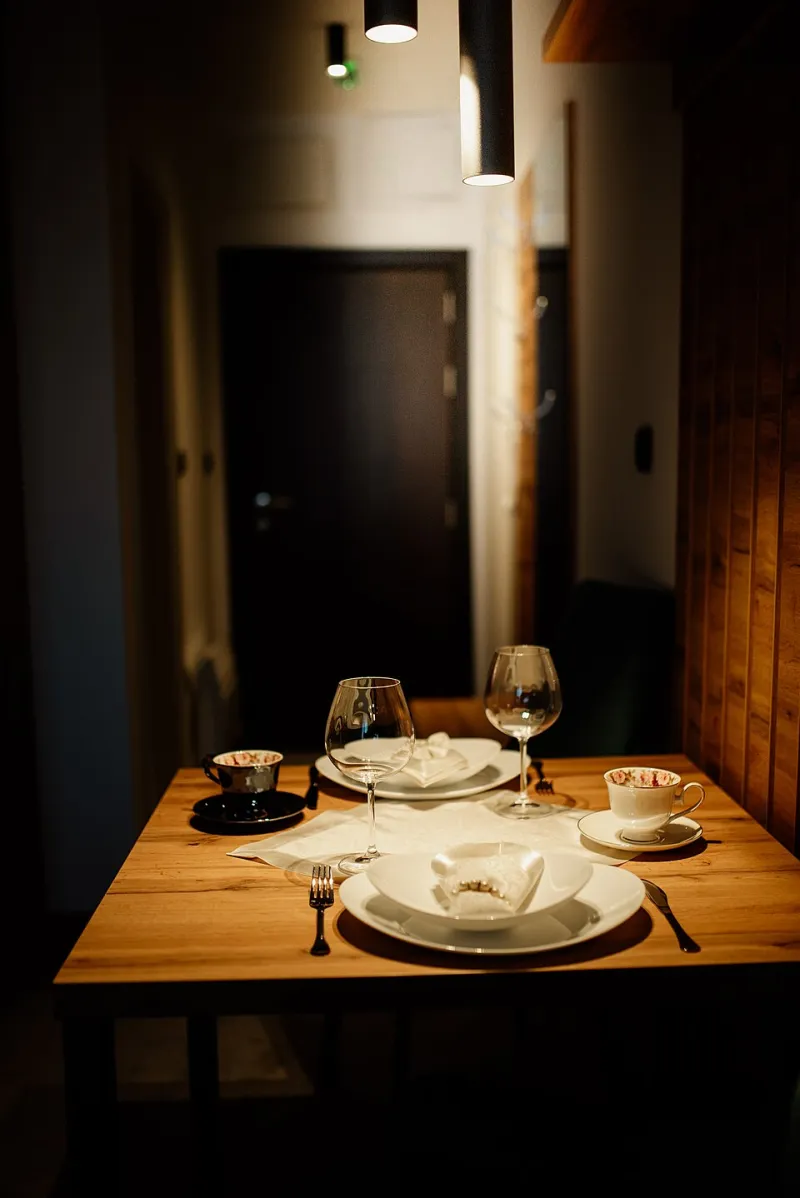
Photo: elegant early dinner table setting before theatre warm evening light, via www.thelogocreative.co.uk
The early sitting has a reputation problem. Say you have booked a table at six and someone will assume you are either a tourist, a parent on a tight babysitter clock, or a person who considers dinner a necessary pit stop before the real event. The pre-theatre menu, in particular, has been filed away as the lesser option: a shorter list, a quicker turn, a meal that exists mainly to get you out of the door.
I want to make the case for the other view. The early table can be the most civilised table in the room. It asks you to arrive with a little purpose, to eat with attention, and to leave while the evening still has somewhere to go. That is not a compromise. That is a proper night out, just with better pacing.
Why the early table got a bad name
Some of the criticism is fair. A badly run early sitting can feel like a conveyor belt: orders taken before coats are off, starters landing while you are still deciding whether to have a drink, the bill appearing with the coffee. Restaurants have themselves to blame for that. But the answer is not to abandon the early reservation. It is to reclaim it.
The early dinner has a bad name because it is often sold as a discount version of the main event. In practice, the opposite can be true. You get the room before it fills, the kitchen before it hits its busiest hour, and the front-of-house team with enough time to talk you through the menu. You also get the pleasure of anticipation. There is something quietly luxurious about sitting down at six, knowing that the theatre, the cinema, or simply a long walk home is still ahead of you.
A tragedy that understands timing
Othello is not a play that rewards rushing. It is a tragedy built on pressure, suspicion and the terrible things that happen when people cannot slow down enough to ask the right question. We are not suggesting dinner should be quite that tense. But a restaurant named after Shakespeare’s most claustrophobic tragedy has a natural interest in timing. The difference between a good evening and a frazzled one is often just a few minutes of breathing space.
That is why we treat the early sitting as a proper occasion rather than a quick turn. A table at six should still feel like a table you have chosen, not a slot you have been allocated. The pacing can be gentle. The menu can be shorter without feeling mean. The service can be attentive without hovering. And the clock can be acknowledged without being allowed to run the whole evening.
The civilised art of the six o’clock table
The early dinner works best when you stop pretending it is the same as a late dinner. It has its own rhythm. You arrive with the light still in the sky, you order a drink that feels like a beginning rather than a continuation, and you choose dishes that will not leave you too full to enjoy the second half of the night. It is a meal with a horizon.
For theatregoers, this is where the early sitting really earns its keep. A West End curtain or a regional playhouse start does not have to mean a frantic dash from the office or a sandwich eaten standing up. A well-planned early dinner gives you the rare pleasure of arriving at the theatre calm, fed and still speaking to your companion. You are not watching the clock. You are watching the play.
Practical notes for a properly paced early dinner
Book the table with the whole evening in mind. If the curtain is at seven-thirty, six is often the sweet spot; five-forty-five can feel rushed if the restaurant is still finding its feet. Tell the team you are going to the theatre. A good restaurant will adjust the pace without making you feel like a countdown timer has been placed on the table.
Order with a little restraint. A starter and a main is usually plenty before a show; if you want pudding, consider having it after the curtain instead, or ask whether it can be served quickly without turning the evening into a sprint. Choose a drink that suits the time of day. A glass of something crisp or a low-alcohol aperitif can be more civilised than a second bottle you will regret during the second act.
Most importantly, arrive ready to be a guest rather than a customer in a hurry. The early sitting is not a lesser experience. It is simply a different one, and it rewards the same things any good dinner rewards: attention, appetite and a little ceremony.
The curtain call begins at the table
We like the early table because it asks diners to dress for the evening rather than collapse into it. It fits the Othello idea that going out should feel like going out. You put on something you like, you sit down properly, and you let the first part of the night be as considered as the main event.
So the next time you see a six o’clock slot, do not treat it as the table for people who cannot stay up. Treat it as the table for people who know how to begin. The curtain rises at the restaurant first.