Paper, Please: The Quiet Case for Keeping the Menu in Your Hands
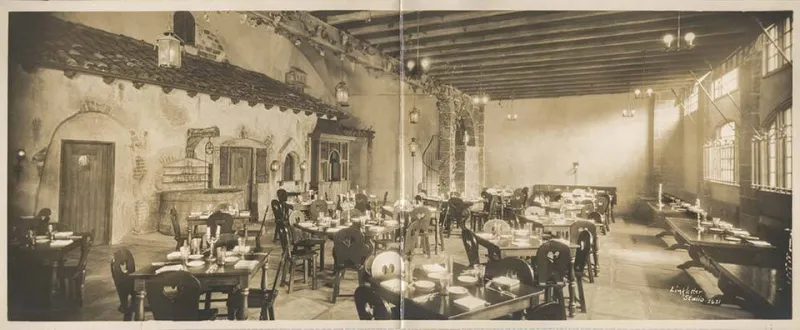
Photo: Linkletter Studio, Public domain, via Wikimedia Commons
There is a small, underrated moment at the start of a good dinner. You sit down. The napkin lands in your lap. And then someone hands you a menu. Not a link. Not a laminated card with a QR code the size of a postage stamp. A proper menu, with a bit of weight to it, printed on paper that feels as if somebody chose it on purpose.
In 2026, that moment is no longer automatic. Plenty of restaurants have replaced the menu with a phone screen, and the reasons are understandable: cost, speed, the ability to change a dish without reprinting a whole run. But convenience has a way of quietly rewriting the mood of a room. And when the menu becomes a web page, something of the theatre goes with it.
This is not a plea for nostalgia. It is a plea for keeping the first act of dinner in the dining room, where it belongs.
The little lift of the cover
A paper menu asks something of you, and that is part of its charm. You have to pick it up. You have to open it. You have to decide whether to read it like a book or scan it like a list. There is a physicality to the ritual that a screen cannot quite replicate, however crisp the PDF.
A phone, by contrast, is a door to everywhere else. The moment you unlock it to read the menu, you are also one notification away from the office, the group chat, the delivery you forgot to rearrange. The paper menu is gloriously single-purpose. It sits in your hands and says: for the next few minutes, this is the only thing worth looking at.
That matters more than we tend to admit. A meal out is not just food arriving at a table. It is a sequence of small signals that tell you to slow down, settle in and pay attention. The menu is one of the earliest of those signals. When it is made of paper, it feels less like a transaction and more like an invitation.
Design is part of the welcome
A good menu is designed, not just printed. The typography, the spacing, the way the dishes are grouped, the paper stock, the colour of the ink, the weight of the card: all of it shapes how you read the food before you taste it. A well-made menu can make a simple plate of pasta feel like an event. A badly made one can make a fillet steak feel like a form to be filled in.
At Othello, we think of the menu as part of the room. It should feel like it belongs on the table, alongside the glassware and the linen, not like something that arrived by email. A paper menu gives a restaurant the chance to speak in its own voice: a line of description with a bit of wit, a note about where the fish came from, a quiet nudge towards the dish the kitchen is proudest of this week.
That kind of voice is harder to sustain on a screen. Digital menus often default to the language of an inventory: name, price, allergen icons, add to basket. Useful, certainly. But a restaurant is not a warehouse with chairs. The menu is one of the few places where hospitality can be written down.
Why the screen keeps creeping in
None of this is to pretend that QR codes arrived for no reason. They are cheap to update, easy to translate and handy when a kitchen changes a dish at the last minute. In a busy site with a frequently shifting menu, a digital version can save time and waste. For diners with accessibility needs, a well-built online menu can be adjusted, enlarged or read aloud.
But there is a difference between a tool and a default. A QR code that sits quietly on the back of a paper menu, ready for anyone who wants it, is one thing. A QR code that is the only way to see what is on offer is another. It turns a moment of hospitality into a small test: have you got signal, have you got battery, have you got the patience to squint at a PDF while your dinner guest waits?
In older buildings, the answer is often no. In a listed dining room with thick walls, or a basement bar with a moody lack of reception, the paper menu is not a romantic affectation. It is simply the more reliable piece of technology.
Hospitality has a shape
There is a reason a menu handed over by a person feels different from a link. It is a small act of service, and it has a shape. Someone has decided where you will sit, what you might like, how the evening will unfold. The menu is part of that welcome. It says: we have been expecting you, and we have thought about what you will find here.
A screen can be efficient, but it rarely feels hosted. It can make a restaurant feel like a portal rather than a place. And in a year when so much of life is already mediated by glass and notifications, there is something quietly luxurious about being handed a piece of paper and asked to choose.
It is also, frankly, better for conversation. Two people can share a paper menu. They can point at a dish, pass it across the table, argue gently about whether to order the soufflé. A phone screen tends to become a private object, angled away from the person opposite. The paper menu keeps the decision in the room.
The menu as a small souvenir
Not every menu needs to be a keepsake. But there is a reason people still ask if they can take one home from a particularly good dinner. A paper menu holds the memory of the evening in a way a browser history does not. It records what was on, what you chose, what you nearly chose. It is a small, tactile footnote to a night out.
That is not a reason to print menus on heavy card and frame them. It is a reason to treat the menu as part of the experience rather than an overhead to be trimmed. The best restaurants understand that the details diners remember are rarely the ones that saved the most money.
A sensible middle path
So what does a good menu look like in 2026? Probably a paper one, handed to you with a smile, with a QR code available for anyone who prefers it. The paper carries the voice and the design. The digital version carries the flexibility. Neither has to cancel the other out.
The point is not to ban the phone. The point is to stop letting the phone set the tone. A restaurant worth dressing up for should feel like somewhere you have been invited, not somewhere you have been processed. And that welcome can start with something as simple as a menu you can hold.
So please, put the phone down. Pick up the menu. Take your time. The first course is already beginning.