The Cutlery Test: Why Your Fork Makes Its Case Before the Menu Does
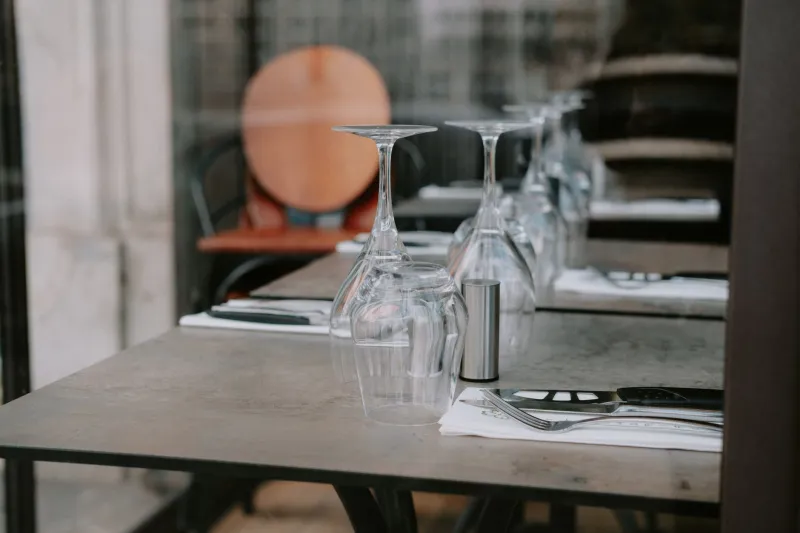
There is a moment, just after you sit down, when your hands go looking for something to do. They smooth the napkin. They find the stem of a glass. And then they rest, quite naturally, on the cutlery. Most diners don’t think about it. But the cutlery is thinking about them.
At Othello, we have spent a lot of time on this quiet introduction. Not because we are precious about forks, but because we have watched what happens when the tools on the table feel right — and what happens when they don’t. A meal is a performance, and the cutlery is the first costume change. It happens before the curtain goes up.
The first handshake happens in your fingers
Our front-of-house lead describes it as ‘the handshake you don’t notice you’re having’. You pick up a fork and your brain runs a rapid, silent assessment. Is it heavy enough to feel substantial? Is the balance right, or does it tip forward like it wants to leave? Does the metal feel cool and clean, or has it been sitting under a warm lamp since lunchtime?
None of this reaches the level of conscious thought. But it colours the mood. A fork that feels flimsy makes the room feel flimsy. A knife with a bit of heft tells you that someone here cares about the details. It is the same principle as a good jacket: the weight of the cloth does half the work before anyone sees the cut.
We have experimented with lighter sets in the past. They looked elegant on the table and felt like nothing in the hand. Guests didn’t complain — they rarely do — but there was a subtle shift in the room. People handled their food more cautiously. The meal felt less like an occasion and more like a pit stop. The cutlery had made a promise on our behalf, and the kitchen then had to work twice as hard to keep it.
Why the heavier knife wins
When we chose the current set, we did what any sensible restaurant does: we ordered samples, laid them out on a white cloth and spent an afternoon picking them up and putting them down. The knife we settled on is not extravagant. It is simply honest. It has enough weight to feel like a tool rather than a prop, and the handle sits flush against the palm without asking you to grip it like a pencil.
The fork is the same story. The tines are smooth, the shoulders are wide enough to comfort, and the whole thing balances on the index finger without a wobble. The spoon is polished to a cool finish — not ice-cold, but cool enough to feel clean. These are small things. They are also the things your hands notice before your palate has woken up.
There is a practical side, too. Heavier cutlery sits more steadily on the table. It doesn’t ping against the plate when you set it down. It doesn’t slide into the wrong position while you’re talking. That matters in a dining room where the table is set like a stage: everything should look as though it belongs exactly where it is.
The mismatch problem
A while back, we ran a small trial. We deliberately set a handful of tables with mismatched cutlery — a heavier knife here, a lighter fork there — just to see if anyone would mention it. Almost nobody did. But the servers noticed something else. Guests at those tables took longer to settle. They rearranged their place settings. One or two asked, very politely, if they could have another fork.
They couldn’t say why. They just knew something was off. That is the strange power of a mismatched set: it doesn’t announce itself, but it quietly undermines the room. It is the equivalent of wearing a dinner jacket with a pair of trainers. You might carry it off, but you’ll spend the evening aware that something isn’t quite right.
We ended the trial early. Since then, every place setting at Othello is checked before service. Not just for cleanliness, but for consistency. The same weight, the same finish, the same quiet promise on every table.
Setting the table is its own kind of dressing up
There is a reason we polish the cutlery last. It is the final flourish before the doors open — the moment the table stops being furniture and becomes a place where something might happen. The napkins are folded, the glasses are gleamed, and then the knives and forks are laid down with a little care. It is not glamorous work. But it is the work that says: we are ready for you.
Dining worth dressing up for starts before you arrive. It starts with a table that has already dressed itself. The cutlery is part of that. It is the table’s tailoring — the quiet, tactile detail that tells you whether the evening ahead will be ordinary or something to remember.
So next time you sit down, pick up the fork before you pick up the menu. Give it a little weight in your hand. If it feels right, that is not an accident. It is the first course, served before the food arrives.